
A vendor audit is a structured review of a vendor you already use. It looks at how they’ve performed, what needs to change, and whether they should keep getting your work. This guide is for buyers of services: facility and property managers, construction purchasing teams, and anyone who hires cleaners, painters, electricians, waste haulers, testing firms or consultants.
In this guide:
- Why manufacturing vendor KPIs don’t work for service vendors
- The vendor KPIs that do
- When to audit, and how often
- A vendor audit checklist and meeting agenda
- Vendor corrective action, do-not-use status and the way back
- FAQ
Vendor KPIs for service vendors
These six measures work for most service vendors. Score each one on a simple 1 to 5 scale, and write down what a 1, 3 and 5 look like so every reviewer scores the same way.
- Ease of doing business. How flexible the vendor is in helping you reach your goal. Do they move the schedule when an earlier trade runs late, shift crews when needed, and adapt when an extra section turns up? Or do they ask for a new contract and more budget every time?
- Responsiveness. How quickly they answer, show up and dispatch in an emergency. For a waste hauler, can they pull a bin that fills ahead of schedule the same day?
- Rework. How often work had to be redone, and whose cost it was.
- Scope adherence. Whether they delivered everything they quoted, including cleanup. Did they leave work for your site team to clean up on their behalf?
- Quote accuracy. How closely the final cost matched the quote, and how many change orders there were.
- Warranty response. When a defect appears later, do they come back promptly, or drag their heels?
Ease of doing business sounds subjective, but it isn’t if you score the specific behaviours above. In my view, it all comes down to one thing: the vendor’s ability to be flexible and adapt.
Why supply-chain vendor KPIs don’t fit service vendors
Most vendor audit advice comes from manufacturing. It measures on-time delivery, defect rate and fill rate. Those KPIs work for finished goods. You can inspect a chair before you buy it, and a mature production line makes the thousandth unit as good as the first.
Services don’t work that way, for two reasons.
The work varies. I’ve spent my career buying for construction and property operations, and with services, results vary with the timing, the work and the person doing the job, even when the crew comes from the same company.
The result shows up late. With a service, you often can’t judge the quality when you sign the contract, or even when the crew leaves. In my experience, the true performance sometimes shows up a year, two years, five years or even ten years later. You find out whether a paint job was done properly when the warranty period ends and you count the defects.
So a service vendor audit needs different KPIs, measured at different times.
When to audit a vendor, and how often
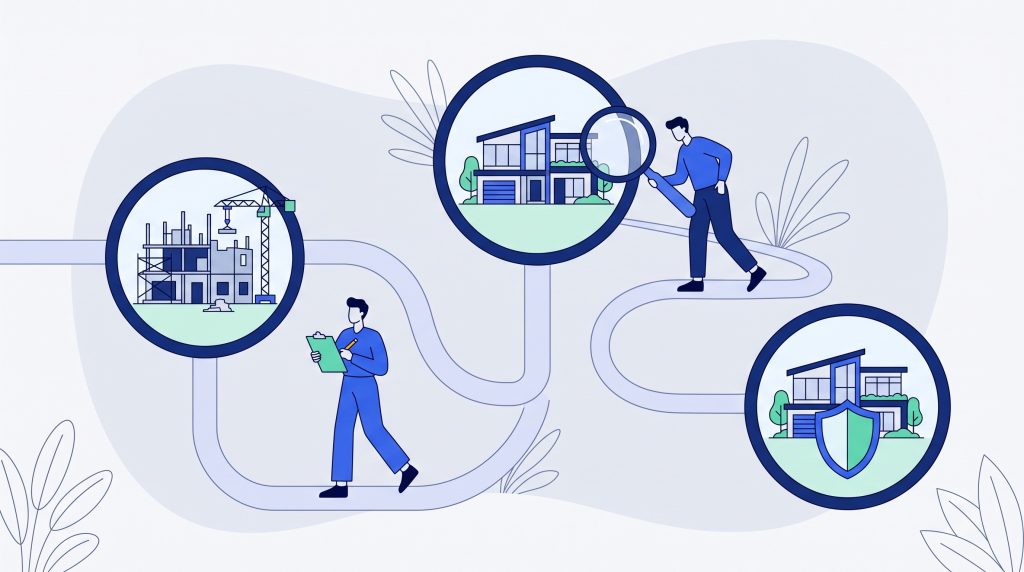
For project vendors, review at three checkpoints:
- Midpoint of the scope. Problems caught here can still be fixed on this job.
- End of the scope. Assess quality, attitude and ease of doing business while it’s fresh.
- End of the warranty period (only for vendors with warranty obligations). Did the work hold up?
The midpoint and final reviews often tell different stories. A vendor who is fine halfway through can slip into delays near the end. Or a vendor new to a job this size can start slowly, find their rhythm, add labour and finish to a very high standard. You want the whole arc.
For ongoing vendors you use every week across every site, such as janitorial, waste, office supplies or maintenance, use a fixed calendar instead. I review enterprise-wide vendors every six months, with input from everyone who uses them. For your highest-risk or highest-spend service vendors, a quarterly vendor audit is worth the extra effort.
What about scale? One commercial building can involve 50 or 60 vendors. That sounds unmanageable, but the reviews are staggered because each vendor starts and finishes at a different time. A contract signed in April gets its midpoint review in June and its final review in October. The key is to keep each rating very short. My target is about ten seconds per rating for field staff. If it takes longer, people stop doing it.
Vendor audit checklist: what to prepare
Before you sit down with a vendor you’ve used for a year, pull together:
- Field reviews from the period: quality, ease of doing business, attitude and on-time performance on site.
- Spend and volume, this year and last.
- Delivery and incident record.
- Wins and losses: the jobs that went well and the ones that didn’t.
- Rework, change orders and warranty callbacks.
- Informal field feedback. Call the superintendents and project managers before the meeting: “I’m about to meet this concrete supplier. What do you think of them?”
That last item is the one buyers most often miss. The buyer usually isn’t the end user of the service. As buyers, we only see a portion of the job: the contract and the bid. The wins and losses happen in the field, and sometimes the vendor’s salesperson knows more about what happened on site than you do. I’ve found field feedback is as valuable as knowing how much you spend with the vendor.
At a bank, the rule is know your customer. In purchasing, it’s know your vendor.
Who should attend a vendor review

Not just purchasing. Include the people the vendor’s performance affects:
- The project director or operations lead. Their view covers past and future work.
- Estimating or planning. They can tell the vendor what requirements are coming, which is often the most valuable part of the meeting for the vendor.
- The buyer. They bring the hard data: volume purchased, volume with problems, volume done well.
In manufacturing the list changes (plant manager, owner, supply chain manager), but the principle is the same. Invite the people who live with the vendor’s work.
Vendor audit meeting agenda
Use this agenda for a quarterly, semi-annual or end-of-project review:
- The numbers. Volume, spend and the delivery record.
- Field feedback. Scores on the six KPIs, plus specific examples.
- What worked. Name it, so the vendor keeps doing it.
- What needs work. Be specific, and tie each point to an example.
- What you could do better as a customer. Clearer communication, better scheduling notice, faster payment terms.
- What’s coming. Upcoming projects and requirements, from estimating.
- Agreed actions. Who does what, by when.
- Status and next review date. Preferred, approved, proceed with caution or on hold.
Item 5 matters more than it looks. A vendor audit isn’t a blame session. I treat it as mutual development: what worked well, what the vendor needs to work on, and what we need to do to be better customers. You won’t fix everything, but you’ll find the pain points.
Vendor corrective action: handling an underperformer
When a vendor is underperforming but not bad enough to drop, the goal is to fix the relationship, not to issue a warning.
- Tell them the truth about where they rank. Some vendors get comfortable and treat you as a nice-to-have customer, while hungrier competitors would do more to win the work.
- Point them at the market. Encourage them to find out what competitors offer as standard, so they can see where they’re under-delivering. Share only public or general information, never a competitor’s proprietary pricing.
- Explain lost bids. I call vendors who didn’t win to tell them why: price, relationship, missing features, or a proposal that didn’t fit what the owner wanted. If the owner is looking for a white vehicle and you only have black, the vendor needs to know that.
- Agree on specific changes and a date to check them, then review again at that date.
If the next review shows no improvement, the corrective action path ends with the vendor on hold.
Do-not-use status, and the way back
The usual reasons a vendor ends up on do-not-use are dropping the ball one too many times, or losing the people who made them good.
Two examples from my own work: a concrete testing firm lost its only testing engineer. The owner was still there, but nobody could sign off a test, so the firm went on do-not-use until it hired a replacement. A painting contractor changed foremen, kept making mistakes and started costing the project money, so it went on hold until the crew was retrained. Years later, with a new team, we tried them again and they turned out to be superstars.
Do-not-use doesn’t have to be permanent, but coming back should be staged:
Do-not-use → Proceed with caution → Approved
To move a vendor up a stage, re-qualify them. Meet the new people, learn what changed in their process, and look for evidence such as a stricter quality checklist. Use that meeting to raise the past problems so both sides know where things stand.
How much effort to put in depends on the category. Where only a few vendors can do the work, coaching a mediocre vendor into a strong one (“vendor development”) is worth it. Where there are plenty of good options, move on. Focus on high-risk categories, where a mistake could cost millions or stop operations.
Where the vendor audit sits in the vendor lifecycle
Pre-qualification and the vendor audit sit at opposite ends of the same process:
- Pre-qualification is paper or verbal evidence that a vendor has done this kind of work before. It qualifies them to bid, nothing more.
- The first job is an award, and it runs as proceed with caution.
- The first review confirms the pre-qual was right and moves the vendor to approved.
- Every audit after that decides whether they keep getting work, or whether it’s time to try someone new.
In other words, the review validates the pre-qual. Each audit also becomes evidence for the next award, and for deciding which vendors to keep when you consolidate.
Vendor audit FAQ
How often should you audit a vendor?
For project vendors, at the midpoint of the scope, at the end, and at the end of the warranty period where there is one. For ongoing vendors, at least every six months. Review your highest-risk service vendors quarterly.
What KPIs should you use for a service vendor audit?
Ease of doing business, responsiveness, rework, scope adherence, quote accuracy and warranty response. Manufacturing KPIs like defect rate and fill rate don’t transfer well to services.
What’s the difference between a vendor audit and pre-qualification?
Pre-qualification happens before the first job and shows a vendor is likely to succeed. A vendor audit happens after work is done and confirms whether they did.
Can a vendor on do-not-use status come back?
Yes, but only after re-qualification: new people, a changed process and evidence of improvement. Move them to proceed with caution first, then back to approved.
Who should be involved in a vendor audit?
The buyer, plus the people who work with the vendor day to day and the people planning future work, such as project directors and estimators.
Run your next vendor audit from evidence
An audit is only as good as the record behind it. That includes the do-not-use flags, so a colleague doesn’t hire a vendor you’ve paused thinking they’re new.
PowerRFP collects field ratings at each checkpoint in seconds, keeps the history on each vendor record, and lets you filter your list by performance when it’s time to invite bids. Rating and performance filtering are part of PowerRFP Pro. Start a PowerRFP trial to run your next vendor audit from evidence instead of memory.
Related: Vendor management · RFP evaluation criteria